Home / Articles
Eyelid Surgery + Rhinoplasty: What Happens When You Do Both?
Home / Articles
Eyelid Surgery + Rhinoplasty: What Happens When You Do Both?
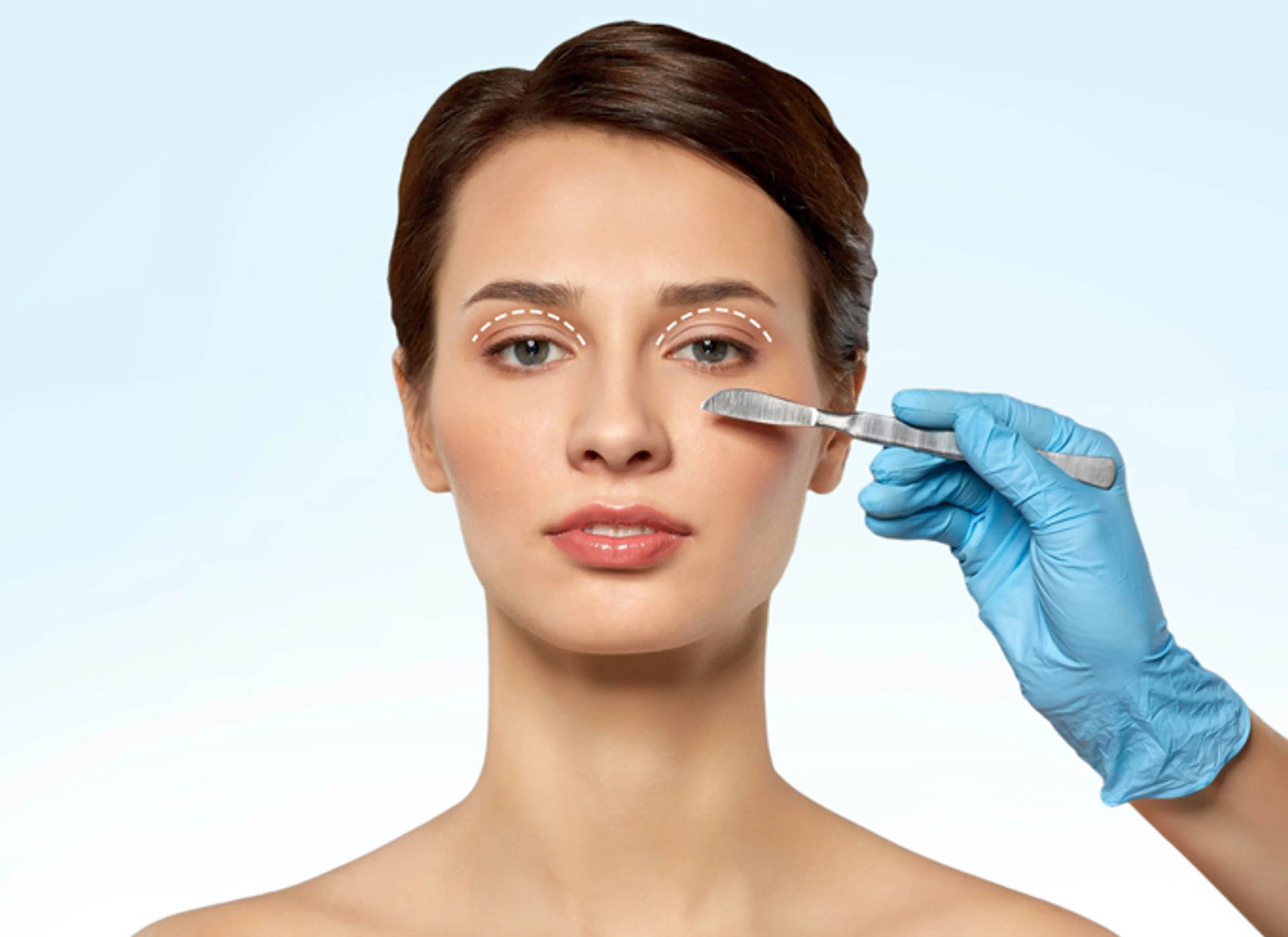
If you’ve been researching cosmetic surgery options in South Korea, chances are eyelid surgery and rhinoplasty have both crossed your radar. Individually, they’re among the most common procedures not only in Korea but globally — and for good reason. Each focuses on enhancing a central part of the face: the eyes and the nose. But what actually happens when you decide to do both at the same time?
Some patients initially come in thinking, “I just want to fix my nose,” or “I only want to open up my eyes.” But during consultation, it becomes clear that improving one feature can sometimes unintentionally draw attention to another. For example:
A higher, more defined nose bridge may make heavy upper eyelids look more droopy by comparison.
Creating double eyelids can emphasize asymmetries in nasal shape or tip projection.
The face is a connected canvas. You can’t adjust one part without affecting the overall picture. At Hugo Plastic Surgery, we often explain it this way: “Doing eyelid surgery without considering the nose is like changing the frame of a painting without checking if it still fits the wall.”
From a practical standpoint, doing both surgeries together reduces:
Many working professionals, students, and international patients prefer the combined approach for this reason alone. Instead of spacing surgeries out over several months, you can address two concerns in one trip — with a unified surgical strategy.
The sequence of procedures depends on your facial anatomy and goals, but typically:
At Hugo Plastic Surgery, Dr. Seonghyeok Yang approaches combined surgeries like orchestrating a symphony. It’s not just about technique — it’s about timing, precision, and knowing how changes in one feature will subtly influence another. For example, adjusting the nasal tip projection may slightly alter the perceived distance between the eyes, especially in frontal photos. These small shifts are carefully planned in advance.
For the eyelids, minimal tissue removal and precise suture techniques are key. Especially for patients seeking a natural, “non-surgical” look, we focus on subtle corrections — not dramatic overhauls.
Here’s something many patients are surprised to learn: combining eyelid and nose surgery doesn’t necessarily mean double the discomfort.
When performed together, your post-op care plan will be coordinated to manage swelling across the upper and central face. Cold compresses, head elevation, and anti-inflammatory meds are crucial in the first 72 hours. Most patients at Hugo Plastic Surgery return to low-intensity daily activities within 7–10 days — though bruising may take a bit longer to fully fade.
Here’s a realistic healing breakdown:
Many of our patients say the combined surgery was “the best decision,” especially once they see how harmonized their new features look together.
You might be a strong candidate if:
You have aesthetic concerns with both your eyes and nose — such as small eye openings, under-eye fat, or a low nasal bridge.
You’re in good health, a non-smoker, and able to take about 10–14 days for initial recovery.
You’re traveling to Korea and want to maximize your time here with an efficient, high-quality treatment plan.
However, we don’t recommend combining surgeries for every patient. If you have complex nasal anatomy, a history of keloid scarring, or require eyelid correction due to nerve-related drooping, a staged approach might be safer.
During your consultation at Hugo Plastic Surgery, Dr. Yang will evaluate your facial structure, skin type, medical history, and goals to determine whether combining the two is the right call.
Let’s be honest — some clinics offer combo surgeries simply because it’s profitable. But at Hugo Plastic Surgery, we treat your face like a lifelong investment, not a sales opportunity.
If you’ve been thinking about eyelid surgery or rhinoplasty — or both — the most important step is getting a personalized consultation.
At Hugo Plastic Surgery, we specialize in facial harmony. Under the leadership of Dr. Seonghyeok Yang, we offer customized treatment plans that balance aesthetics, safety, and long-term beauty. Whether you want a subtle lift to the eyelids, a more defined nose, or a full facial refinement — you’ll receive expert care in a clinic known for natural, high-quality results.