Home / Articles
“My Thread Lift Journey: Day 1 to Day 30 Photos & Tips”
Home / Articles
“My Thread Lift Journey: Day 1 to Day 30 Photos & Tips”
There’s a moment many people describe when they decide to do something about facial aging. It’s not a dramatic “before and after,” but rather the quiet realization that the contours of your face are shifting. The cheeks don’t hold the same fullness, the jawline feels softer, and makeup no longer sits quite right.
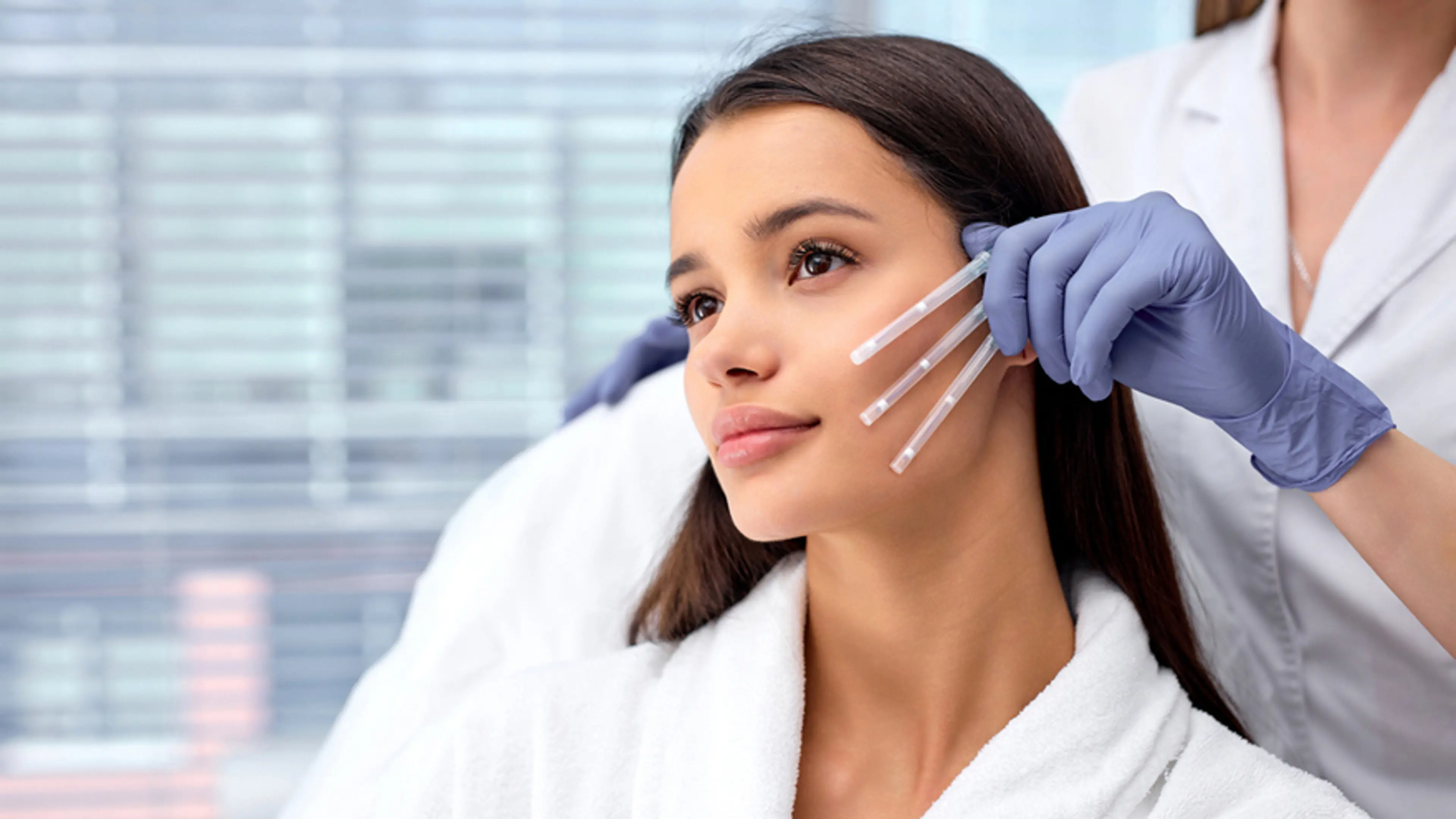
Right after the procedure, patients almost always notice one thing: tightness. The threads — often made of PDO (polydioxanone), a safe, absorbable material — act like tiny anchors beneath the skin. They are placed along vectors chosen to lift and support sagging tissue.
The face may look slightly swollen, and bruising can begin to appear around the entry points. Some describe the sensation as if their skin is being “held up by invisible scaffolding.” Eating soft foods is recommended, since chewing can strain the treated areas.
At Hugo Plastic Surgery, we give every patient detailed aftercare guidance, including:
Apply cold compresses intermittently to reduce swelling.
Sleep on your back with your head slightly elevated.
Avoid touching or pressing on the treated areas.
The key here is patience. The first 24 hours are not about admiring results, but about giving your skin the chance to adapt.
During the next couple of days, tenderness is more noticeable. Some patients report minor pulling sensations when smiling, chewing, or speaking. This is normal — your face is adjusting to its new support structure.
Skin dimpling can appear along the thread paths, especially around the cheeks. While it may feel concerning at first glance, it’s part of the process. Over time, the tissue relaxes and these irregularities smooth out.
By the end of the first week, swelling is usually much reduced. Bruising, if present, begins to fade into softer yellow-green tones. Patients start to feel more comfortable moving their face, though we still recommend avoiding exaggerated expressions.
This is often when confidence returns. Patients feel ready to go out socially, sometimes with a touch of concealer if bruising remains. For many, the visible improvement in facial contour becomes clearer — the cheeks sit slightly higher, the jawline looks more defined.
At this stage, the lift may still look “tight” or over-corrected. That’s intentional. Skilled surgeons like Dr. Seonghyeok Yang often place threads with slight overcorrection, knowing the tissues will relax into a natural position over the following weeks.
By two weeks, the majority of side effects have resolved. Swelling and tenderness are minimal, and dimpling has often smoothed out. Patients begin to feel like themselves again — only subtly refreshed.
This period is when the results transition from “procedure” to “new normal.” You no longer feel as though there are foreign materials in your face. Instead, you see a natural lift, as though time has gently rolled back a few years.
At Hugo Plastic Surgery, we schedule a follow-up appointment around this time. It’s a chance to assess healing, answer questions, and reassure patients about their progress. Many express surprise at how quickly they’ve bounced back compared to friends who’ve undergone more invasive surgeries.
Around the three-week mark, something important happens beneath the surface: collagen production is in full swing. This new collagen reinforces the lifted tissues, creating a firmer foundation. The lift is no longer solely dependent on the threads themselves — your own skin is now participating in its rejuvenation.
We often use the analogy of setting up a tent. The poles (threads) provide immediate structure, but over time, the fabric (your skin) becomes stronger and more resilient, holding its shape beautifully.
By one month, most patients feel completely healed. Bruising and swelling are distant memories, and the lift appears seamless. The skin sits naturally, without obvious signs of intervention.
At Hugo Plastic Surgery, we consider this milestone just the beginning. While the mechanical lift is stable, the collagen stimulation continues for several more months, gradually improving skin firmness.
Every patient’s journey is unique, but there are common practices that help ensure the best possible outcome:
In Korean aesthetics, the goal is subtlety — to look refreshed and harmonious, not overdone. Thread lifts align perfectly with this philosophy. They offer improvement without the “surgical look,” which is why younger patients in their 30s and 40s are increasingly choosing them as preventive anti-aging treatments.
A thread lift might sound simple — a few threads beneath the skin and you’re done. But the truth is, outcomes vary widely depending on the surgeon’s skill. The placement angle, depth, and number of threads make all the difference between a natural lift and one that looks awkward or uneven.
At Hugo Plastic Surgery, every case is personalized. Dr. Seonghyeok Yang draws on his extensive experience as a facial surgery specialist and former adjunct professor at Hanyang University Hospital. His philosophy is simple:
This approach is why so many patients trust our clinic — whether they are local residents of Gangnam or international visitors seeking high-quality Korean aesthetics.
A thread lift is more than a 30-minute procedure. It’s a journey — one that unfolds over weeks as swelling subsides, threads settle, and collagen strengthens your skin from within. From the tightness of day one to the seamless lift of day thirty, the process is both physical and emotional.